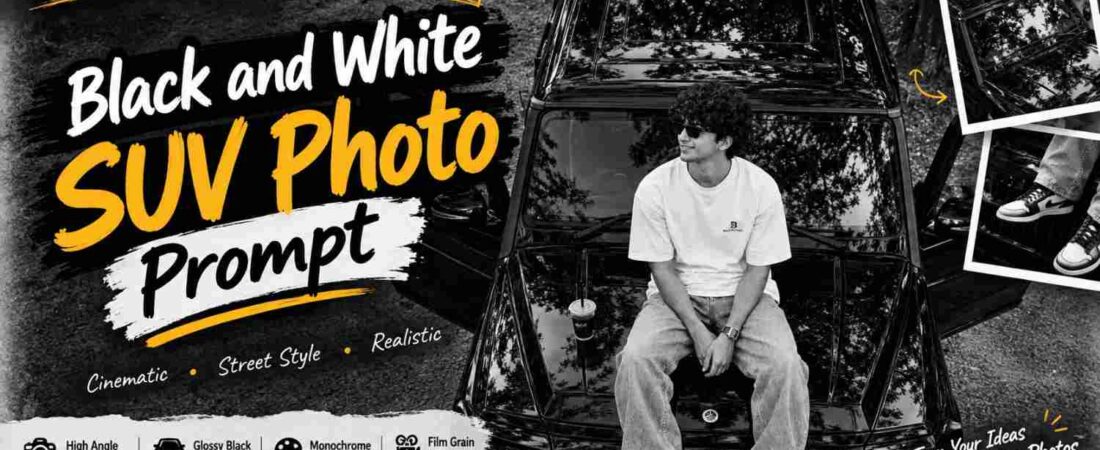
Some photographs don’t need a complicated setup to look impressive. A glossy black SUV, a relaxed pose, monochrome tones and a cinematic camera angle can be enough to create a striking editorial-style image.
This concept shows a young South Asian man casually sitting on the hood of a large black SUV, with trees and gravel around him. The high-angle view, dark sunglasses, oversized white T-shirt, loose jeans and reflective black paint add up to a strong street-fashion look. If you’re looking for a Gemini prompt for this kind of image, the trick is to describe the composition, camera angle, lighting and setting clearly.
The goal is a final picture that feels like a real photograph, not a heavily processed digital creation.
The Concept Behind the Image
The photo is vertical 9:16 and shot from a high overhead angle. He sits directly on the hood of the SUV with his legs hanging over the front edge and his hands loosely clasped between his knees.
His head is turned slightly to one side and he’s looking away from the camera. That makes the moment feel relaxed and candid instead of like a traditional posed portrait. The black-and-white treatment draws attention to the contrast between the dark vehicle and his lighter clothes.
The High Overhead Camera Angle
The camera angle is one of the most distinctive things about this image. Instead of a normal eye-level portrait, the scene is shot from above, so you can see a large part of the SUV along with the man sitting on it.
That turns the vehicle into a real part of the composition instead of just a backdrop. The vertical frame also leaves room for his full outfit, the front of the SUV and the outdoor surroundings.
A Relaxed Street-Fashion Pose
The pose should look effortless. Hands clasped between the legs, legs hanging over the hood, head turned slightly away: nothing about it looks overly arranged, and that’s why it works.
Natural anatomy and realistic proportions matter a great deal here. The arms, hands, legs and sitting position all need to connect believably with the vehicle. When you write a ChatGPT prompt for realistic fashion photography, details like hand placement and body position can be just as important as the clothing and background.
The Outfit and Styling
The outfit is built from a few simple streetwear pieces. An oversized white designer-style T-shirt stands out sharply against the black SUV. Light-wash loose-fit jeans carry on the relaxed mood, and black-and-white sneakers add some interest near the bottom of the frame. Dark sunglasses finish the look.
Because the final image is monochrome, texture and shape matter more than color. The folds of the T-shirt, the denim texture and the sneaker details should all stay visible.
The Glossy Black SUV
The SUV is a major part of the picture. Its glossy paint should reflect the trees and sky naturally, which adds texture across the hood and windshield. The doors are slightly open, which adds another visual layer.
Reflections shouldn’t look random. They need to follow the shape and perspective of the vehicle so it still reads as a real, photographed object.
The Takeaway Drink
A takeaway cup sits on the hood beside him. It’s a tiny detail, but it makes the moment feel spontaneous. Instead of a perfectly arranged fashion shoot, it looks like he’s simply relaxing next to the car with a drink. Small touches like this make an image feel lived-in and believable.
The Outdoor Setting
The scene takes place on gravel, surrounded by trees. The trees add natural texture and show up as reflections across the SUV, while the gravel anchors the vehicle in a real location. The background should stay interesting without pulling attention away from the main subject.
The Black-and-White Cinematic Look
The monochrome treatment is central to the style. Deep blacks give weight to the SUV, while softer highlights bring out the white shirt, jeans, sneakers and facial details. Natural shadows add depth, and a touch of film grain gives the image a slightly vintage feel.
You don’t want an extreme black-and-white filter. The photo should keep enough tonal variation to show texture in the clothing, skin, vehicle and surroundings.
The Complete Image Prompt
Use this prompt exactly as provided:
Ultra-realistic black-and-white cinematic photo, vertical 9:16. A young South Asian man casually sitting on the hood of a large glossy black SUV, viewed from a high overhead angle. He is wearing dark sunglasses, a white oversized designer T-shirt, light-wash loose-fit jeans, and black-and-white sneakers. His hands are naturally clasped between his legs, legs hanging over the front edge, head turned slightly to the side while looking away from the camera. A takeaway drink cup is placed on the hood beside him. SUV doors slightly open, highly reflective black paint and windshield reflecting surrounding trees and sky. Outdoor gravel-and-tree setting. Strong monochrome contrast, deep blacks, soft highlights, natural shadows, subtle film grain, luxury street-fashion editorial aesthetic, realistic skin texture, accurate anatomy, natural proportions, sharp details, 35mm.
How to Use the Prompt, Step by Step
- Open your image tool. Gemini and ChatGPT’s image generation both handle this kind of scene well.
- Paste the prompt as written. It already covers the subject, pose, setting and camera details.
- Generate several versions. Results vary, and the second or third attempt is often more natural than the first.
- Check the hands and sitting position first. These are the most common problem areas.
- Change one thing at a time. Adjust only the grain, only the outfit or only the location so you can see what made the difference.
Why Reflections Matter
Because the SUV has a highly polished black surface, the trees and sky should appear across the hood and windshield. These reflections connect the vehicle to its environment.
If they look inconsistent with the shape of the car, the photo quickly loses its realism. Keeping them physically believable makes a noticeable difference.
Maintaining Realistic Skin and Anatomy
The man should have natural skin texture, not a smooth, filtered look. His face, arms, hands and legs need realistic proportions, and the clothing should follow the natural shape of his body.
Hands deserve special attention in generated photography, since strange fingers or awkward positions can make an image look artificial at once. The same goes for the sitting position. He should look like he has real weight and contact with the SUV, not like he was placed on top of it.
Creating a Genuine Editorial Feel
A strong editorial photo doesn’t need dramatic effects everywhere. Composition, wardrobe, lighting, reflections and monochrome contrast already create a distinctive style. A little film grain adds character, and natural shadows keep the image from looking flat.
For any AI prompt focused on fashion photography, it helps to describe the actual visual qualities you want, instead of repeating words like “professional” or “cinematic” over and over.
Common Mistakes to Avoid
- Distorted hands. Check fingers closely and regenerate if they look odd.
- Floating subject. If he doesn’t seem to have weight on the hood, ask for natural contact and shadows.
- Random reflections. Reflections should follow the car’s curves and show trees and sky.
- A harsh black-and-white filter. Keep tonal variation so textures remain visible.
- Overcomplicating the prompt. Piling on adjectives rarely helps and can pull the result away from the original idea.
How to Experiment With the Concept
Once the main composition works, try small changes. Keep the overhead angle but move the SUV to a different outdoor location, such as a quiet road, a parking lot or a desert track. Try different outfits while keeping the monochrome treatment, or adjust the grain and the balance between highlights and shadows.
Changing too many things at once can erase the original character of the photo. Keeping the core composition steady makes experimenting much easier.
Frequently Asked Questions
Can I make this in color?
Yes. Remove “black-and-white” and “monochrome” from the prompt and describe the colors you want. The glossy reflections will still work.
Can I use my own face?
If your tool supports reference photos, upload a clear, well-lit one and ask it to preserve your face and features.
Why do the hands look strange?
Hands are a common weak spot. Regenerate a few times, or add “accurate anatomy, natural hands and fingers.”
Can I change the car?
Absolutely. A sedan, a jeep or a classic car all work. Keep the glossy paint and reflections for the same effect.
What does “35mm” do in the prompt?
It nudges the tool toward the look of 35mm film photography, with natural perspective and a slight vintage character.
Final Thoughts
This concept works because it combines a few strong elements without making things unnecessarily complicated. The glossy black SUV provides structure and contrast, the relaxed pose creates a candid feeling, and the black-and-white treatment gives the scene a timeless editorial look. The high overhead angle also makes it more distinctive than a typical portrait.
If you enjoy realistic photography ideas, Prompt Ayesha can be a useful starting point for exploring different combinations of poses, locations, outfits, camera angles and photographic styles.
The most important thing is to keep the result believable. Natural anatomy, realistic lighting, accurate reflections, subtle texture and consistent perspective can make the difference between an image that looks generated and one that feels like an actual photograph.